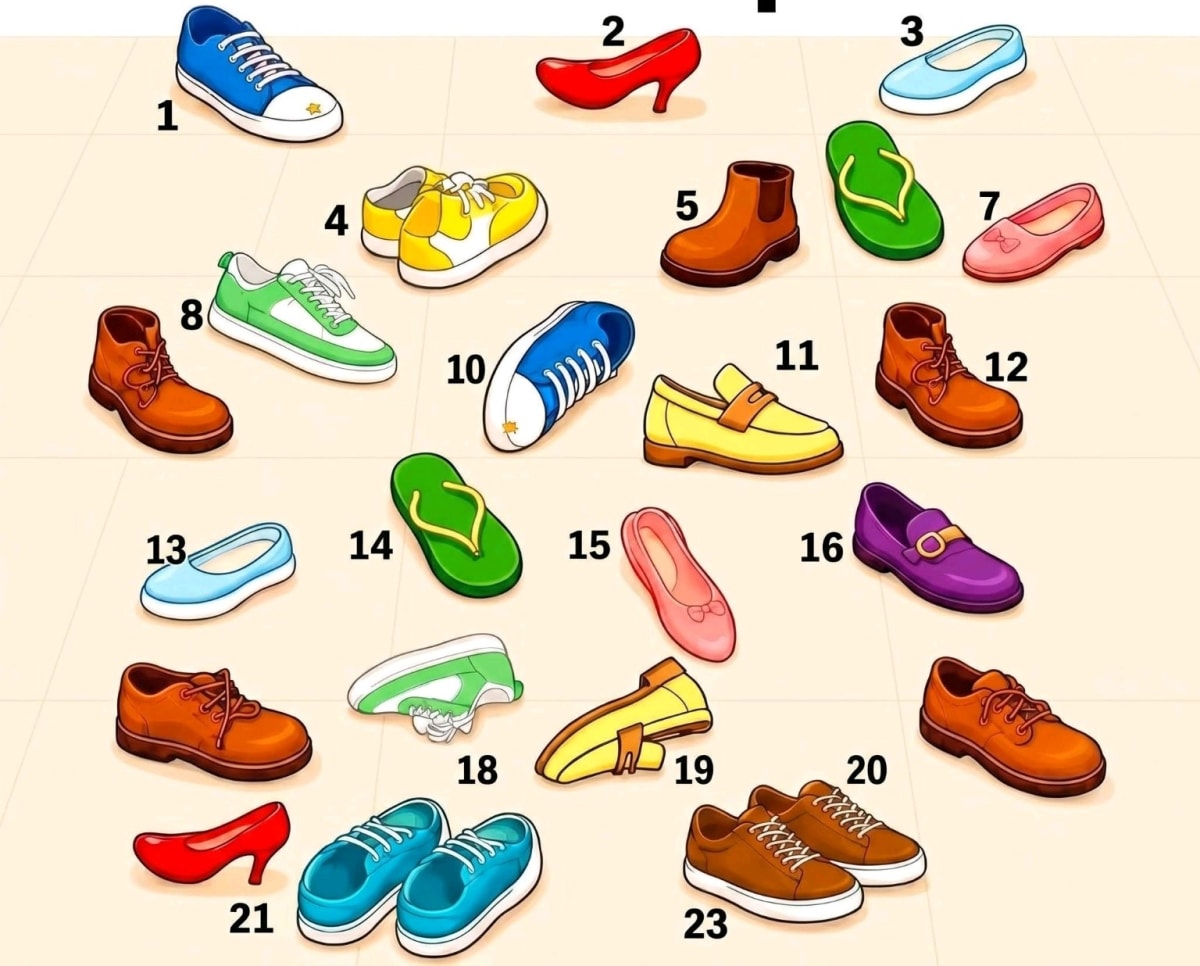
This type of visual puzzle is connected to the way the human brain processes patterns, symmetry, and fine details. It tests observational skills, short-term visual memory, and the ability to compare objects quickly and accurately. From a psychological perspective, such tasks activate selective attention — the cognitive process through which the brain filters large amounts of visual information in search of irregularities. Interestingly, many people initially overlook the correct answer because the brain automatically assumes that repeated objects follow a logical and complete structure. This is precisely why these puzzles are so popular on social media: they combine entertainment, cognitive challenge, and a strong sense of satisfaction once the solution is discovered.